

There’s a particular kind of loneliness that happens inside a relationship — sitting next to someone you love and still feeling far away from them. That gap usually has a name: a loss of emotional connection. It’s one of the most common things couples bring into therapy, and one of the most fixable, if you know where to look.
Emotional connection is the sense of being truly known, understood, and safe with another person. It’s built through consistent vulnerability, responsive listening, and shared meaningful experiences — and it can fade with neglect but is generally rebuildable with intentional effort from both people.


What Emotional Connection Actually Feels Like
- You can share an unfinished thought and trust it’ll be met with curiosity, not judgment
- Silence together feels comfortable, not tense
- You feel like a priority, even during busy or stressful periods
- Vulnerability is met with responsiveness rather than dismissal
What Erodes It
Emotional connection rarely disappears in one dramatic moment. It usually erodes gradually, through:
- Chronic distraction — phones, work stress, and general “busyness” replacing real conversation
- Unaddressed resentment that quietly builds over time
- One-sided emotional labor, where one partner consistently does the listening and rarely receives it back
- Avoiding vulnerability out of fear of rejection or conflict
- Physical intimacy continuing while emotional intimacy quietly declines
Building (or Rebuilding) Emotional Connection
Step 1: Create Uninterrupted Time
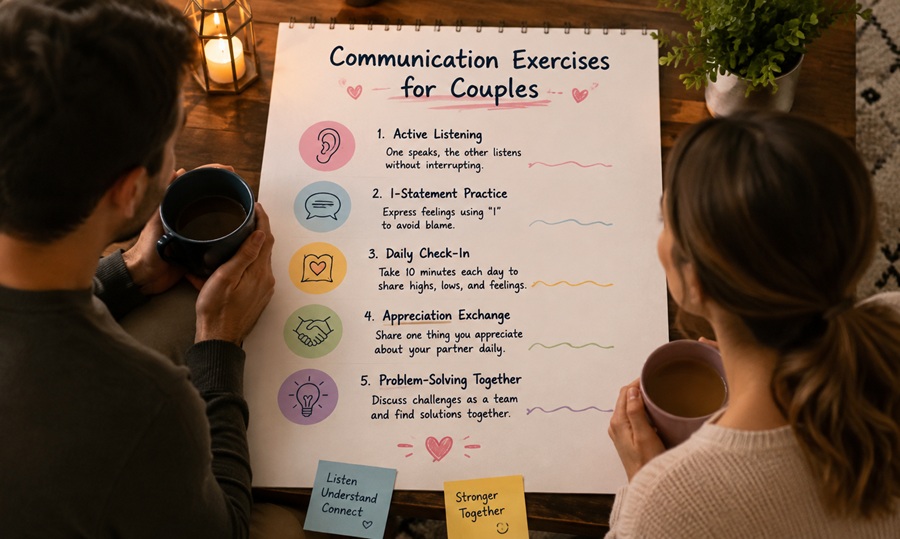
Even fifteen minutes of phone-free, distraction-free conversation daily makes a measurable difference. Consistency matters more than duration.
Step 2: Practice Responsive Listening
When your partner shares something, respond in a way that shows you actually heard it — reflect it back, ask a follow-up, resist the urge to immediately problem-solve unless they’ve asked for advice.
Step 3: Share Vulnerably, Not Just Informationally
There’s a difference between “the meeting ran long” and “I felt overlooked in that meeting today.” Emotional connection deepens through the second kind of sharing.
Step 4: Rebuild Shared Experiences
Novel, shared activities — even small ones — reactivate the sense of partnership that routine can dull.
Step 5: Repair After Conflict, Don’t Just Move Past It
Skipping repair after an argument leaves residue that quietly erodes connection over time, even if the argument itself gets “resolved.”
A Quick Self-Check
Ask yourself honestly:
- When did we last have a conversation that wasn’t logistical (schedules, chores, errands)?
- Do I feel comfortable being vulnerable with my partner right now?
- Does my partner know what’s actually stressing me lately?
- Do we make time for each other, or only find time by accident?
If most answers are unsettling, that’s useful information — not a verdict on the relationship, but a starting point.
Emotional Connection vs. Physical Attraction
| Emotional Connection | Physical Attraction | |
|---|---|---|
| Builds through | Vulnerability, trust, shared meaning | Chemistry, appearance, novelty |
| Fades from | Neglect, distraction, unresolved conflict | Time, familiarity (though not always) |
| Rebuildable | Generally yes, with consistent effort | Often reignites once emotional closeness returns |
Interestingly, couples often report that physical intimacy improves once emotional connection is restored — the two are more linked than people assume.
FAQ
Can emotional connection be rebuilt after years of distance?
In most cases, yes — it requires consistent effort from both partners, and sometimes professional support, but distance is rarely permanent if both people are willing to reinvest.
Is it normal for emotional connection to fluctuate?
Yes. Stress, illness, and major life changes naturally affect closeness; the concern is prolonged disconnection with no attempt to reconnect.
How is emotional connection different from love?
Love can persist even when emotional connection has faded temporarily; connection is more about the day-to-day experience of feeling close and understood.
What role does couples therapy play in rebuilding connection?
A therapist can help identify communication patterns that block connection and provide structured tools to rebuild it more efficiently than trial and error alone.
Can you have emotional connection without physical intimacy?
Yes — emotional connection is possible in relationships with reduced physical intimacy, though most couples report greater overall satisfaction when both are present.
Emotional connection isn’t a fixed resource you either have or don’t — it’s closer to a muscle. Neglected, it weakens. Used consistently, even in small ways, it strengthens again.