Category: Love

  • Emotional Connection: What It Is and How to Build It

    Emotional Connection: What It Is and How to Build It

    There’s a particular kind of loneliness that happens inside a relationship — sitting next to someone you love and still feeling far away from them. That gap usually has a name: a loss of emotional connection. It’s one of the most common things couples bring into therapy, and one of the most fixable, if you know where to look.

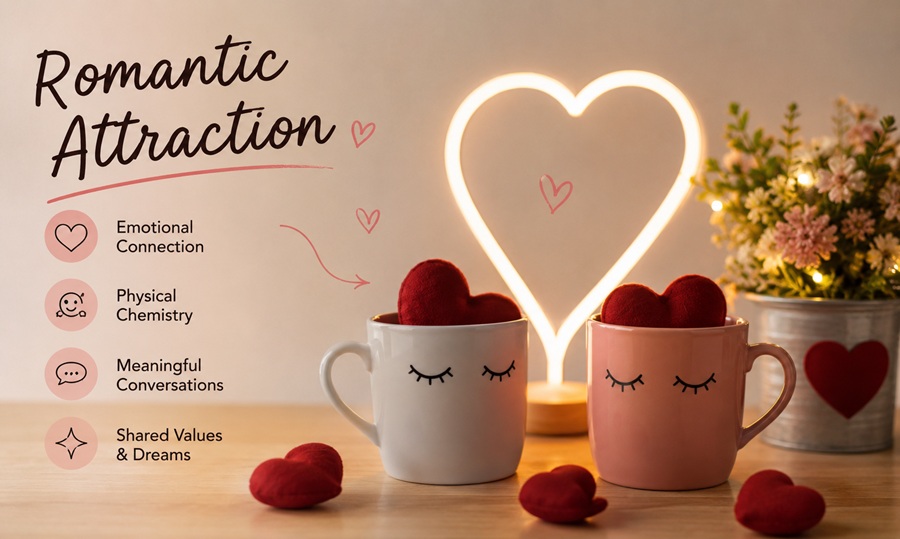
    Emotional connection is the sense of being truly known, understood, and safe with another person. It’s built through consistent vulnerability, responsive listening, and shared meaningful experiences — and it can fade with neglect but is generally rebuildable with intentional effort from both people.

    What Emotional Connection Actually Feels Like

    • You can share an unfinished thought and trust it’ll be met with curiosity, not judgment
    • Silence together feels comfortable, not tense
    • You feel like a priority, even during busy or stressful periods
    • Vulnerability is met with responsiveness rather than dismissal

    What Erodes It

    Emotional connection rarely disappears in one dramatic moment. It usually erodes gradually, through:

    • Chronic distraction — phones, work stress, and general “busyness” replacing real conversation
    • Unaddressed resentment that quietly builds over time
    • One-sided emotional labor, where one partner consistently does the listening and rarely receives it back
    • Avoiding vulnerability out of fear of rejection or conflict
    • Physical intimacy continuing while emotional intimacy quietly declines

    Building (or Rebuilding) Emotional Connection

    Step 1: Create Uninterrupted Time

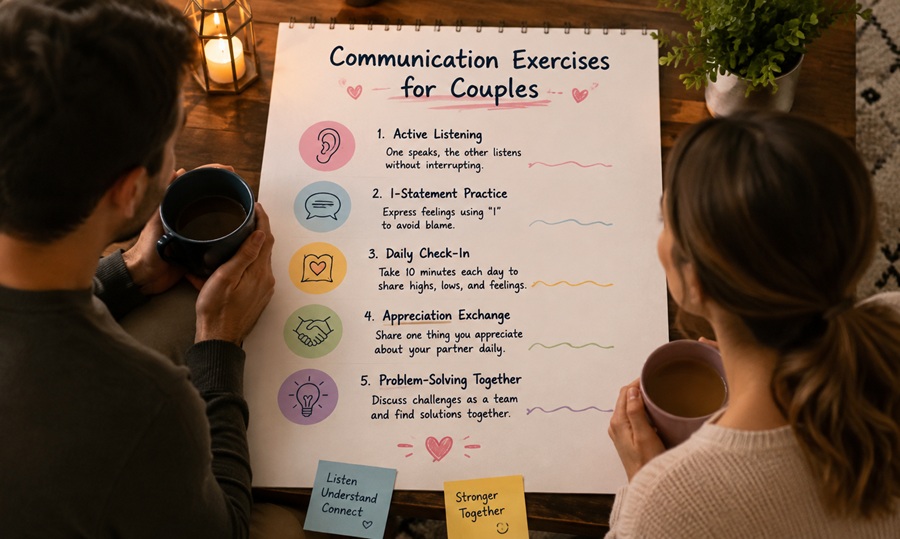
    Even fifteen minutes of phone-free, distraction-free conversation daily makes a measurable difference. Consistency matters more than duration.

    Step 2: Practice Responsive Listening

    When your partner shares something, respond in a way that shows you actually heard it — reflect it back, ask a follow-up, resist the urge to immediately problem-solve unless they’ve asked for advice.

    Step 3: Share Vulnerably, Not Just Informationally

    There’s a difference between “the meeting ran long” and “I felt overlooked in that meeting today.” Emotional connection deepens through the second kind of sharing.

    Step 4: Rebuild Shared Experiences

    Novel, shared activities — even small ones — reactivate the sense of partnership that routine can dull.

    Step 5: Repair After Conflict, Don’t Just Move Past It

    Skipping repair after an argument leaves residue that quietly erodes connection over time, even if the argument itself gets “resolved.”

    A Quick Self-Check

    Ask yourself honestly:

    • When did we last have a conversation that wasn’t logistical (schedules, chores, errands)?
    • Do I feel comfortable being vulnerable with my partner right now?
    • Does my partner know what’s actually stressing me lately?
    • Do we make time for each other, or only find time by accident?

    If most answers are unsettling, that’s useful information — not a verdict on the relationship, but a starting point.

    Emotional Connection vs. Physical Attraction

    Emotional Connection Physical Attraction
    Builds through Vulnerability, trust, shared meaning Chemistry, appearance, novelty
    Fades from Neglect, distraction, unresolved conflict Time, familiarity (though not always)
    Rebuildable Generally yes, with consistent effort Often reignites once emotional closeness returns

    Interestingly, couples often report that physical intimacy improves once emotional connection is restored — the two are more linked than people assume.

    FAQ

    Can emotional connection be rebuilt after years of distance?

    In most cases, yes — it requires consistent effort from both partners, and sometimes professional support, but distance is rarely permanent if both people are willing to reinvest.

    Is it normal for emotional connection to fluctuate?

    Yes. Stress, illness, and major life changes naturally affect closeness; the concern is prolonged disconnection with no attempt to reconnect.

    How is emotional connection different from love?

    Love can persist even when emotional connection has faded temporarily; connection is more about the day-to-day experience of feeling close and understood.

    What role does couples therapy play in rebuilding connection?

    A therapist can help identify communication patterns that block connection and provide structured tools to rebuild it more efficiently than trial and error alone.

    Can you have emotional connection without physical intimacy?

    Yes — emotional connection is possible in relationships with reduced physical intimacy, though most couples report greater overall satisfaction when both are present.

    Emotional connection isn’t a fixed resource you either have or don’t — it’s closer to a muscle. Neglected, it weakens. Used consistently, even in small ways, it strengthens again.

  • Love Compatibility: What Really Predicts It (Not Zodiac)

    Love Compatibility: What Really Predicts It (Not Zodiac)

    Can two people really be “compatible,” or is that just a nice word we use after the fact to explain why something worked? Researchers who study relationships would say: a little of both. Compatibility isn’t fixed at birth by your star sign — it’s built from a handful of measurable factors, and this article walks through what they are.

    Quick answer: Love compatibility is best predicted by aligned core values, similar attachment styles or the ability to manage differing ones, compatible conflict-resolution habits, and shared life goals — not by personality “types” alone. Compatibility is partly found and partly built through how two people handle differences.

    1. Values Alignment

    This is the single strongest predictor of long-term compatibility, according to most relationship research. Values include:

    • How you view money — spender vs. saver
    • Family expectations — closeness, distance, involvement
    • Career ambition and work-life balance
    • Religion, spirituality, or lack thereof
    • Views on children

    Two people can have wildly different personalities and still be highly compatible if their values line up. The reverse is also true — similar personalities with clashing values tend to struggle.

    2. Attachment Style

    Attachment theory, originally developed to study infant-caregiver bonds, translates surprisingly well to adult romantic relationships. The four main styles are:

    • Secure — comfortable with intimacy and independence
    • Anxious — craves closeness, fears abandonment
    • Avoidant — values independence, uncomfortable with too much closeness
    • Disorganized — a mix of anxious and avoidant patterns

    Two secure partners tend to have the smoothest compatibility. An anxious-avoidant pairing is the most common combination that produces a push-pull dynamic — one partner chasing closeness while the other retreats.

    3. Conflict Style

    It’s not whether you argue. It’s how.

    Conflict Style Description Compatibility Impact
    Collaborative Problem-solves together Strong long-term fit
    Avoidant Withdraws from conflict Workable if both partners avoid, risky if paired with a confronter
    Volatile Argues passionately but reconnects quickly Can work if both partners share the style
    Hostile Criticism, contempt, defensiveness Predicts relationship breakdown regardless of pairing

    4. Shared Life Goals

    Two people can love each other deeply and still be incompatible if one wants children and the other doesn’t, or if one wants to relocate abroad and the other is rooted to family nearby. Compatibility requires overlapping — not identical — visions of the future.

    5. Humor and Communication Rhythm

    Less studied but widely reported by couples themselves: shared humor and a similar pace of communication (how quickly you respond, how much detail you share) smooths day-to-day interaction in a way that’s easy to underestimate.

    Compatibility Myths Worth Retiring

    • “Opposites attract” leads to lasting love. Rarely, on its own — differences work when core values still align.
    • Zodiac signs determine compatibility. No scientific evidence supports this; it persists because it’s fun, not because it’s accurate.
    • If it’s real love, it won’t take work. All durable compatibility requires some maintenance — it’s not purely discovered, it’s partly built.
    • A quiz can tell you if you’re compatible. Quizzes can spark conversation, but self-reported answers on a five-minute test can’t capture how two people actually behave under stress.

    How to Actually Assess Compatibility With Someone

    1. Watch how they handle a minor disagreement, not just how they talk about big ones
    2. Ask directly about the big five: money, family, career, religion, kids
    3. Notice how they treat people who can’t do anything for them — service staff, strangers
    4. Pay attention to your own physiology — do you feel calmer or more anxious around them over time?
    5. Give it time; early chemistry doesn’t reliably predict long-term compatibility

    FAQs

    Does astrology have any role in compatibility?

    Not scientifically, though some couples enjoy it as a shared activity or conversation starter rather than a genuine predictor.

    Can incompatible people become compatible over time?

    Partially — communication and conflict skills can be learned. Core values are much harder to shift and rarely worth trying to force.

    Is chemistry the same as compatibility?

    No. Chemistry is an initial spark; compatibility is the sustained fit over time. Plenty of high-chemistry pairings are low-compatibility.

    How important is a shared sense of humor?

    Highly rated by couples as a day-to-day satisfaction factor, though it’s secondary to values and conflict style for long-term stability.

    Can two anxious attachment styles work well together?

    It’s possible but often intensifies anxiety in both partners without active communication skills to counterbalance it.

    Is compatibility something you’re born with or something you build?

    Both — some baseline alignment helps, but skills like communication and repair are learned and significantly influence long-term compatibility.