Category: Dating

  • Engagement Ring Types: A Complete Buyer’s Guide

    Engagement Ring Types: A Complete Buyer’s Guide

    Buying an engagement ring involves more decisions than most people expect — cut, setting, metal, and stone all interact to determine both the look and the price. This guide walks through the major categories so you can shop with an actual vocabulary instead of just pointing at a display case.

    Quick answer: The main engagement ring types are defined by setting style (solitaire, halo, three-stone, vintage, pavé) and diamond or gemstone cut (round, princess, oval, cushion, emerald, pear). Solitaire and halo settings remain the most popular choices, while cut affects both appearance and price per carat.

    Ring Settings

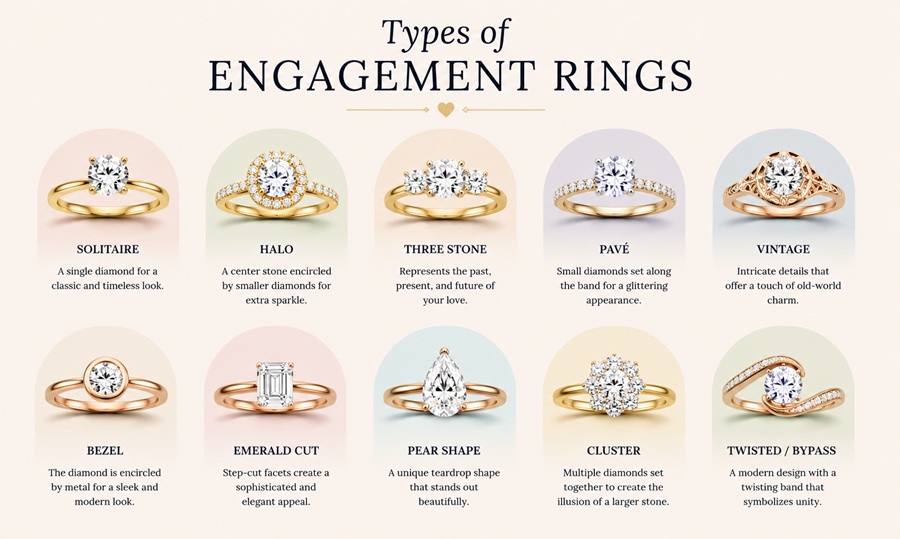
    Solitaire – A single stone, usually held by four or six prongs. Timeless, versatile, and generally the most budget-friendly setting for a given carat weight.

    Halo –  A center stone surrounded by a ring of smaller diamonds. Makes the center stone look larger and adds extra sparkle.

    Three-Stone –  Symbolizes past, present, and future. A center stone flanked by two smaller stones, often the same shape.

    Vintage / Antique-Inspired –  Intricate metalwork, milgrain detailing, filigree patterns. Popular for couples wanting a design with more character.

    Pavé –  Small diamonds set closely along the band, adding shimmer without a large budget increase.

    Bezel –  The stone is fully or partially wrapped in metal. Extremely durable and a good choice for active lifestyles.

    Diamond and Gemstone Cuts

    Cut Shape Notable For
    Round Brilliant Circular Maximum sparkle, most popular cut overall
    Princess Square Modern look, strong brilliance
    Oval Elongated round Appears larger per carat, elongates the finger
    Cushion Rounded square Vintage feel, soft brilliance
    Emerald Rectangular, step-cut Elegant, shows clarity more than sparkle
    Pear Teardrop Unique silhouette, slimming visual effect
    Marquise Elongated with pointed ends Maximizes perceived size

    Metal Options

    • Platinum — durable, naturally white, hypoallergenic, higher cost
    • White gold — similar look to platinum at a lower price, needs occasional replating
    • Yellow gold — classic, low-maintenance, complements vintage styles
    • Rose gold — warm tone, increasingly popular for modern and vintage designs

    Budget Considerations

    Setting style and cut both affect price independent of carat weight. A halo setting can make a smaller center stone appear larger, which is a common strategy for balancing budget with visual impact. Step cuts like emerald show inclusions more visibly than brilliant cuts, so clarity matters more when choosing that shape.

    How to Choose

    1. Consider their existing jewelry style — do they wear delicate pieces or bold statement jewelry?
    2. Balance the “Four Cs” (cut, color, clarity, carat) against your budget — cut generally has the biggest visual impact
    3. Think about lifestyle — active hands may do better with a bezel or low-profile setting
    4. If unsure, a classic solitaire or halo is the safest choice and rarely goes out of style

    FAQ

    What’s the most popular engagement ring style right now?

    Solitaire and halo settings remain the two most commonly chosen styles, according to major jewelry retailers’ sales data.

    Is a bigger carat weight always better?

    Not necessarily — cut quality often has a greater impact on visual sparkle than carat size alone.

    What’s the difference between platinum and white gold?

    Platinum is naturally white and more durable but pricier; white gold achieves a similar look through rhodium plating, which needs periodic reapplication.

    Are lab-grown diamonds a good option?

    Yes for many buyers — they’re chemically identical to mined diamonds but typically cost significantly less for the same size and quality.

    How do I choose the right ring size without them knowing?

    Borrow a ring they already wear on the correct finger and have a jeweler measure it, or ask a close friend or family member for help.

    What ring setting is most durable for active lifestyles?

    Bezel settings offer the most protection since the metal fully surrounds the stone, reducing the risk of snagging or chipping.

  • 25 Wedding Themes for 2026 (With Ideas for Each)

    25 Wedding Themes for 2026 (With Ideas for Each)

    Picking a wedding theme sets the tone for every other decision that follows — the venue, the colors, the invitations, even the playlist. Below is a working list of 25 themes couples are actually choosing in 2026, grouped by style so you can narrow things down fast.

    Quick answer: Popular 2026 wedding themes include modern minimalist, romantic garden, rustic barn, coastal, vintage glam, and destination-inspired styles, each defined by a distinct color palette, venue type, and décor approach.

    Classic & Timeless

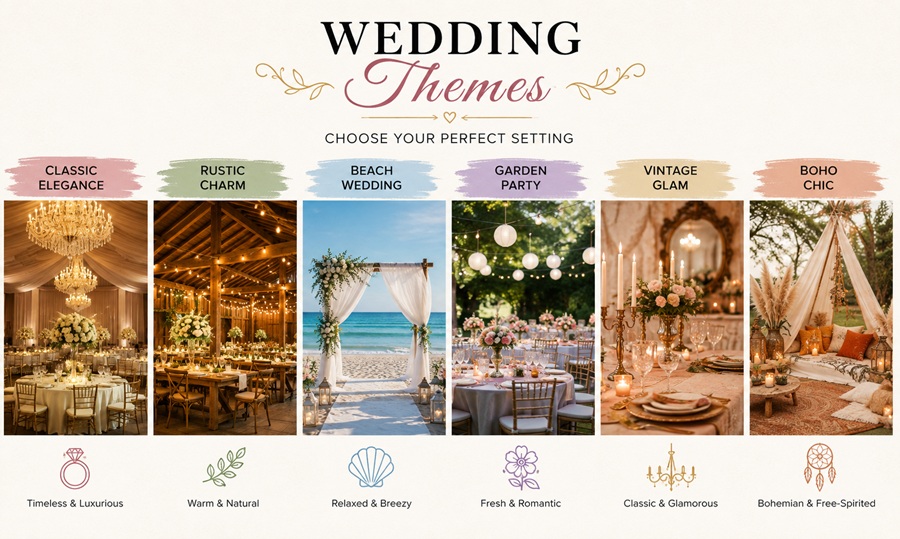
    • Traditional Elegant — White and gold, formal ballroom, candlelight
    • Vintage Glam — Art Deco accents, gold flatware, jazz-age styling
    • English Garden — Soft pastels, floral arches, outdoor marquee
    • Old Hollywood — Black and white palette, dramatic lighting, glamorous fabrics

    Nature-Inspired

    • Rustic Barn — Wood tables, string lights, wildflower centerpieces
    • Woodland Forest — Greenery, moss, wooden signage, earthy tones
    • Coastal Beach — Sand-toned linens, driftwood details, ocean backdrop
    • Mountain Retreat — Plaid accents, pinecones, warm cabin lighting
    • Desert Bohemian — Terracotta tones, cacti, macramé details

    Modern & Minimalist

    • Modern Minimalist — Neutral palette, clean lines, sculptural florals
    • Industrial Chic — Exposed brick, Edison bulbs, metal accents
    • Monochrome — Single-color palette across florals, attire, and décor
    • Scandinavian — Light wood, white linens, understated greenery

    Cultural & Destination

    • Tuscan Countryside — Olive branches, terracotta, long communal tables
    • Tropical Destination — Bold florals, bright colors, open-air venue
    • Japanese-Inspired — Cherry blossoms, minimalist lines, calligraphy details
    • Moroccan — Rich jewel tones, lanterns, patterned textiles

    Seasonal Themes

    Season Palette Signature Elements
    Spring Pastels, blush, sage Fresh florals, garden venues
    Summer Bright citrus, coral Outdoor ceremonies, lighter fabrics
    Autumn Burgundy, rust, gold Foliage, candlelight, warm textures
    Winter Navy, silver, deep green Evergreen, fairy lights, indoor elegance

    Playful & Personal

    • Retro 70s — Warm oranges, disco elements, groovy fonts
    • Storybook Fairytale — Fantasy florals, dramatic gowns, castle-like venues
    • Music Festival — Boho textiles, food trucks, live bands
    • Backyard Casual — String lights, mismatched seating, relaxed dress code

    How to Choose a Theme That Fits

    • Start with the venue — some themes only work in specific settings
    • Consider the season, since availability of flowers and comfort of guests both shift
    • Think about your everyday style as a couple — a theme should feel personal, not borrowed
    • Set a budget first; some themes (destination, vintage rentals) cost significantly more to execute

    FAQ

    What’s the most popular wedding theme right now?

    Modern minimalist and romantic garden styles remain the two most requested by couples currently planning, according to wedding industry surveys.

    Can I combine two themes?

    Yes — many couples blend elements, such as rustic barn with garden florals, as long as the palette stays cohesive.

    How far in advance should I choose a theme?

    Ideally 9–12 months before the wedding, since it affects venue booking, vendor selection, and invitation design.

    Do wedding themes need to match the season?

    Not strictly, but matching the season generally reduces cost and logistical complexity — flowers and outdoor venues both cost more out of season.

    What’s a budget-friendly wedding theme?

    Backyard casual and Scandinavian minimalist themes tend to require the fewest specialty rentals and décor pieces.

    Is a themed wedding more expensive than a traditional one?

    It depends on the theme — destination and vintage-heavy themes tend to raise costs, while minimalist and backyard styles often lower them.

    Choosing a theme isn’t about finding the trendiest option — it’s about picking the version of “us” you want your guests to remember.

  • How to Be an LGBTQ+ Ally: A Practical Everyday Guide

    How to Be an LGBTQ+ Ally: A Practical Everyday Guide

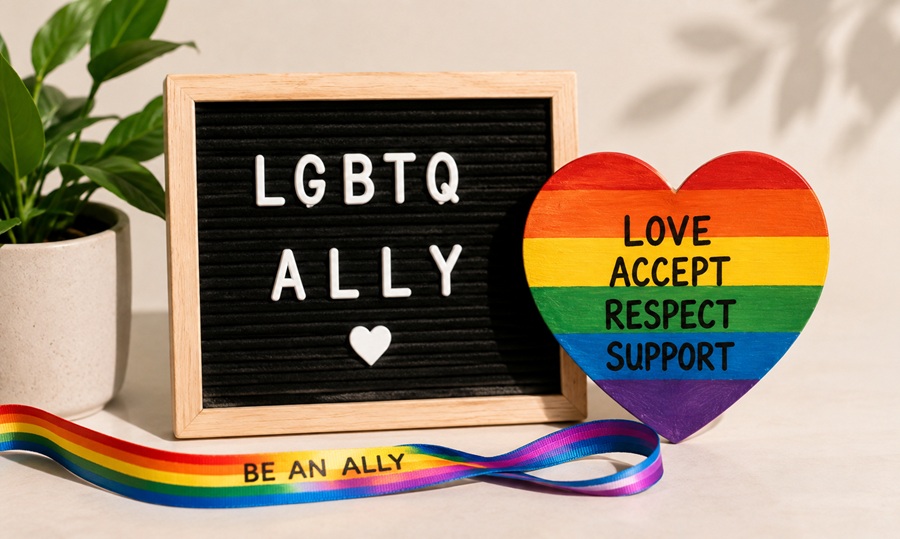
    Being an LGBTQ+ ally means actively supporting the LGBTQ+ community through everyday actions — using correct names and pronouns, challenging discriminatory comments, educating yourself instead of relying on LGBTQ+ people to explain everything, and showing up consistently, not just during Pride Month.

    Being an ally isn’t a label you assign yourself once and then stop thinking about — it’s closer to a practice, something you keep doing. This guide is meant as a working starting point, not a finish line.

    What Allyship Actually Requires

    • Consistency. Support that only shows up in June isn’t support, it’s a marketing calendar.
    • Listening more than talking. Especially in spaces where LGBTQ+ people are already speaking for themselves.
    • Accepting correction gracefully. Getting something wrong and being told so is part of the process, not a personal failure.
    • Using your position when it’s useful. Allies often have social or professional standing that can shift a room in ways a direct target of discrimination cannot always safely do themselves.

    Everyday Actions That Matter

    1. Ask for and use correct pronouns — and correct yourself calmly if you slip up
    2. Don’t assume anyone’s sexual orientation or gender identity based on appearance
    3. Interrupt jokes or comments that rely on LGBTQ+ people as the punchline
    4. Support LGBTQ+-owned businesses and creators when possible
    5. Advocate for inclusive policies at work — bathrooms, benefits, dress codes
    6. Don’t out someone without their explicit permission, ever
    7. Follow LGBTQ+ voices directly rather than relying only on secondhand summaries

    Language Basics Worth Knowing

    Term Quick Meaning
    Sexual orientation Who someone is romantically or sexually attracted to
    Gender identity A person’s internal sense of their own gender
    Transgender Someone whose gender identity differs from the sex assigned at birth
    Cisgender Someone whose gender identity matches the sex assigned at birth
    Nonbinary A gender identity outside the binary of exclusively male or female
    Coming out The ongoing process of sharing one’s identity with others

    Language evolves, and preferred terms can vary by person and community — when in doubt, ask respectfully how someone describes themselves, and use that.

    Mistakes Well-Meaning Allies Often Make

    • Centering their own feelings (“I feel so bad”) instead of the person affected
    • Treating one LGBTQ+ friend as a spokesperson for an entire community
    • Performative support with no follow-through in daily behavior
    • Assuming allyship is finished once it’s been stated publicly

    Note: Discomfort while learning is normal and not a sign you’re doing something wrong — it’s often a sign you’re actually engaging rather than staying comfortably uninformed.

    How to Respond When You Make a Mistake

    1. Acknowledge it briefly
    2. Correct it
    3. Move on without turning the moment into a request for reassurance

    Over-apologizing shifts the emotional labor back onto the person who was affected — brief, sincere correction is usually the more respectful path.

    FAQ

    Do I need to be part of the LGBTQ+ community to be a good ally?

    No. Allies are, by definition, typically people outside the community who choose to support it consistently.

    What should I do if a family member makes a homophobic joke at dinner?

    Address it calmly in the moment if it’s safe to do so — silence is often read as agreement, even when that’s not the intent.

    Is it okay to ask someone about their gender identity?

    Only if the relationship and context make it appropriate, and only with genuine respect — unsolicited or invasive questions about someone’s body or history are not appropriate, even out of curiosity.

    How can workplaces support LGBTQ+ employees beyond Pride Month?

    Inclusive healthcare benefits, gender-neutral facilities, nondiscrimination policies, and visible representation in leadership all matter more than seasonal branding.

    What if I use the wrong pronoun by accident?

    Correct yourself briefly and continue the conversation — dwelling on it draws more attention to the mistake than a quick correction does.

    Real allyship is boring in the best way — it looks like consistent, unglamorous, everyday decisions rather than a single grand gesture. That consistency is exactly what makes it valuable.